
What Is Glutathione and Why Is It Important for Cellular Health?
Why glutathione is important for cellular health at the molecular level: S-glutathionylation, apoptosis regulation, and Nrf2 gene activation explained.

Most explanations of glutathione stop at “it’s an antioxidant.” That is true, but it undersells what actually happens inside a cell. Glutathione is not just a passive shield against damage, it is an active signal that helps decide whether a cell divides, repairs itself, or dies. Understanding why glutathione is important for cellular health means looking past the general antioxidant story and into the specific molecular mechanisms researchers have mapped inside individual cells. This is a deeper, more technical companion to our broader introduction to what glutathione is, focused specifically on cellular-level biology. If you have already read that overview, this article picks up where it leaves off, at the molecular level.
Where Glutathione Actually Lives Inside the Cell
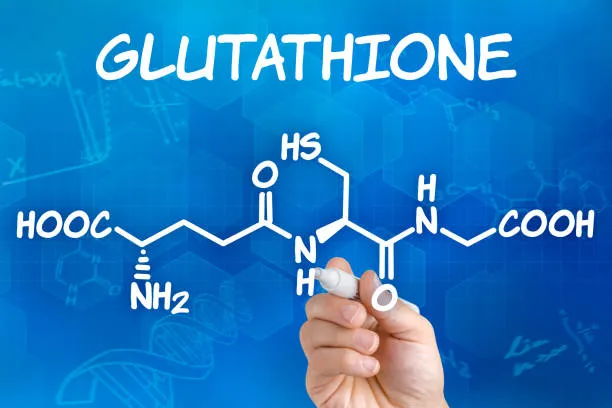
Glutathione is not distributed evenly throughout a cell. According to a peer-reviewed review published on ScienceDirect, distinct glutathione redox pools exist in separate subcellular organelles, meaning the cytosol, mitochondria, and nucleus each maintain their own glutathione balance rather than sharing one uniform pool; that review is available on ScienceDirect. This compartmentalization matters because it lets a cell respond to localized stress, oxidative damage building up in the mitochondria, for example, without necessarily disrupting processes happening in the nucleus at the same moment. Disruption of this cellular glutathione balance is directly implicated in triggering the cell death pathway discussed later in this article.
Glutathione as a Cellular Signal, Not Just a Shield
This is the mechanism most general explanations of glutathione skip entirely. Through a process called S-glutathionylation, glutathione forms a reversible chemical bond with reactive cysteine residues on specific proteins, effectively acting as a molecular switch. A peer-reviewed review describes this as a mechanism of signal transduction by which cells respond effectively and reversibly to redox inputs, noting that glutathionylation regulates most cellular pathways; that review is on PubMed. A separate, more recent review describes how this same reversible modification interconverts proteins between active and inactive forms, mediating cell signaling and redox homeostasis broadly; that review is on PubMed Central. In plain terms: glutathione is not just cleaning up chemical damage after the fact, it is actively flipping switches that change how proteins behave in real time.
How Glutathione Helps Decide Whether a Cell Lives or Dies
Apoptosis, programmed cell death, is a normal, necessary process for tissue development and turnover, but it needs to happen at the right time, to the right cells. A peer-reviewed review found that disrupted cellular glutathione balance contributes to activation of the apoptotic cascade, and that formation of S-glutathiolated proteins is specifically important in apoptotic signaling; that review is on ScienceDirect. A separate study published on PubMed Central found that glutathionylation of a key inflammatory protein, NF-κB, inhibits its ability to bind DNA and enhances apoptosis under low-oxygen conditions, and that a related process amplifies apoptotic signaling by modifying the Fas death receptor; that study is on PubMed Central. A review in Cell Death & Differentiation frames this directly: glutathione’s role here goes “beyond an antioxidant,” actively regulating whether the cell death program proceeds; that review is available via Nature.
Glutathione and Cell Division: Supporting Proliferation
The same S-glutathionylation mechanism extends into how cells physically divide. According to the PubMed review cited earlier, glutathionylation is involved in mitotic spindle formation during cell division by binding cytoskeletal proteins, contributing to both cell proliferation and differentiation; that review is on PubMed. The same review notes glutathionylation also interfaces with phosphorylation, another major cell signaling system, by modulating specific kinases and phosphatases, meaning these two regulatory systems are not separate, they cross-talk directly. This is why glutathione status is relevant to cellular health well beyond simple antioxidant protection, it touches the machinery of cell division itself.
Turning On the Cell’s Own Antioxidant Genes: Glutathione and Nrf2
One of the more remarkable things glutathione does is help activate the cell’s own genetic antioxidant response. A 2024 peer-reviewed study found that glutathione induces S-glutathionylation of a protein called Keap1, which in turn activates a transcription factor called Nrf2, the master regulator of the cell’s antioxidant gene expression, and that this specific mechanism helped mitigate glucose-induced cell dysfunction in insulin-producing beta cells; that study is on PubMed Central. This means glutathione does not just neutralize existing damage, it helps trigger the cell’s own production of additional protective enzymes, a self-reinforcing feedback loop that general antioxidant discussions rarely mention.
Cell-Type Specific Dependency: Immune Cells and Infection Response
Not every cell type depends on this system equally, and immune cells are a well-documented example. A peer-reviewed review found glutathionylation is involved in the cellular response to infection and inflammation, affecting both host proteins and, in some documented cases, microbial proteins directly; that review is on PubMed Central (DOI: 10.3390/nu11081952). Separate, more recent research has identified a related sulfur-containing molecule, glutathione supersulfide, as a regulator of T-cell receptor signaling specifically, adding a further layer to how this chemistry shapes immune cell behavior at the molecular level; that research is available via bioRxiv. See our broader immune health guide for the practical implications of the immune-glutathione connection.
How Researchers Actually Study This
It is worth understanding briefly how scientists detect S-glutathionylation in the first place, since it explains why this research is relatively recent compared to glutathione’s antioxidant role, which has been studied for over a century. Detecting a reversible chemical modification on a specific protein, at a specific location inside a specific cell type, requires more sophisticated laboratory techniques than measuring total glutathione levels in blood or tissue. Advances in proteomics and mass spectrometry over the past two decades are what allowed researchers to map these specific protein switches in detail, which is part of why this signaling-level understanding of glutathione is newer and less widely known than the general \”antioxidant\” framing most people are familiar with.
What Happens When This System Breaks Down
Disruption of glutathione’s signaling role is linked to specific diseases in the research literature, not just vague “aging” or “stress.” A 2022 study found that dysregulated S-glutathionylation contributes to apoptosis of lung epithelial cells, with implications for idiopathic pulmonary fibrosis, a serious lung scarring disease; that study is on PubMed Central (DOI: 10.3390/antiox11091789). Glutathione S-transferase enzymes, which catalyze glutathionylation, have also been studied for their role in regulating cell proliferation and cell death pathways relevant to cancer cell growth and treatment resistance; that research is on PubMed Central. These are cited here to illustrate how directly cellular-level glutathione chemistry connects to disease research, not as a suggestion that any supplement treats these conditions.
Why Is Glutathione Important for Cellular Health? Bringing It Together
Glutathione’s Roles at the Cellular Level
Pulling the research above together: glutathione is important for cellular health because it operates at four distinct levels simultaneously, direct antioxidant defense, protein-level signaling through S-glutathionylation, life-or-death decision-making through apoptosis regulation, and gene-level activation of the cell’s own antioxidant response through Nrf2. Very few molecules in human biology operate across all four of these levels at once, which is part of why researchers describe glutathione’s role as extending “beyond an antioxidant.”
Common Misconceptions About Glutathione’s Cellular Role
- “Glutathione just mops up free radicals and that’s it.” As covered throughout this article, its signaling role through S-glutathionylation is arguably as significant as its direct antioxidant function.
- “More glutathionylation is always better.” This is a reversible, tightly regulated switch, not a one-directional “more is better” process; too much or too little disrupts normal cell signaling in either direction.
- “Cellular signaling research has nothing to do with everyday wellness.” These same mechanisms, apoptosis regulation, Nrf2 activation, immune cell signaling, underlie the more familiar, practical topics like immune resilience and healthy aging discussed elsewhere on this site.
- “This level of detail doesn’t matter if you’re not a scientist.” Understanding that glutathione is a regulatory signal, not just a shield, is exactly why supporting its supply, through diet, lifestyle, or supplementation, connects to so many seemingly unrelated aspects of health.
Why This Deeper Mechanism Matters in Practice
It would be reasonable to ask why any of this molecular detail matters to someone who just wants to feel less tired or get sick less often. The answer is that the practical, everyday topics covered elsewhere on this site, immune resilience, cellular energy, healthy aging, joint comfort, are not separate from what is described in this article, they are the visible, felt consequences of it. When researchers describe glutathione activating Nrf2 to switch on additional antioxidant genes, that same mechanism is part of why adequate glutathione status is associated with better resilience to everyday oxidative stressors, pollution, poor sleep, physical exertion, discussed in more practical terms in our other guides. The cellular signaling story is the “why” behind the more familiar wellness advice, not a separate, unrelated topic.
Supporting This System: Where Cellgevity Fits

All of the cellular mechanisms discussed in this article, S-glutathionylation, apoptosis regulation, Nrf2 activation, depend on cells having adequate glutathione available to draw on in the first place. Cellgevity is built around RiboCeine™, a patented (US Patent #8,501,700) compound that delivers cysteine, the rate-limiting building block for glutathione synthesis, in a protected form. Liver-cell research has shown RiboCeine raising glutathione levels considerably more than NAC at a lower concentration; see our full Cellgevity vs NAC comparison for that data. A peer-reviewed study in Atherosclerosis found ribose-cysteine supplementation significantly raised glutathione-based antioxidant status in a controlled human trial, viewable on PubMed (Kader et al., 2014).
To be precise about what this does and does not mean: none of the cell-signaling studies cited in this article tested Cellgevity itself. They establish the biological importance of the glutathione system generally; RiboCeine’s role is supplying the precursor that system depends on to keep functioning, not a claim that Cellgevity has been shown to directly regulate apoptosis or Nrf2 signaling in a human clinical trial. As with the other cellular topics discussed on this site, the honest position is that RiboCeine supplies the raw material this entire signaling system runs on, while the specific molecular experiments cited throughout this article were conducted on the underlying glutathione and S-glutathionylation biology itself, using standard laboratory glutathione, not any branded formulation.
Frequently Asked Questions
What is S-glutathionylation in simple terms?
It is a reversible chemical process where glutathione attaches to specific proteins, changing whether those proteins are “on” or “off.” It works like a molecular switch rather than simply cleaning up damage after it happens.
Is glutathione the same in every part of the cell?
No. Research shows the cytosol, mitochondria, and nucleus each maintain distinct glutathione pools, allowing localized responses to stress in one compartment without necessarily affecting the others.
Does this mean glutathione can prevent cancer or lung disease?
No. The research cited in this article shows glutathione’s signaling mechanisms are involved in these disease processes at the cellular level, which is different from evidence that raising glutathione prevents or treats these conditions in humans.
How is this different from the general glutathione overview on your site?
Our general glutathione guide covers the chemistry, functions, and how to raise it. This article goes deeper into the specific molecular signaling mechanisms researchers have identified inside individual cells.
Support Your Cellular Glutathione Levels
Explore Cellgevity, built on research-backed RiboCeine™ technology.
Shop Cellgevity NowRelated Reading
- What Is Glutathione and Why Your Body Needs It
- Cellular Health: What Your Cells Need to Keep You Healthy and Energized
- Cellgevity vs NAC: Which Raises Glutathione Better?
- Strengthen Your Immunity: Glutathione (Cellgevity) Against Common Nigerian Illnesses
- Oxidative Stress Explained: What Happens Inside Your Cells?
About Author
