
Oxidative Stress Explained: What Happens Inside Your Cells?
Oxidative stress explained: the real chemistry of free radicals, lipid peroxidation, protein oxidation, DNA damage, and the antioxidant defense system.

Oxidative stress explained simply, in one sentence: it is what happens when unstable molecules called free radicals build up faster than your cells can neutralize them, and it damages three specific things inside every cell, fats, proteins, and DNA. This guide goes past the surface-level “rust” analogy and into the actual chemistry: what free radicals are, where they come from inside your own cells, exactly what gets damaged, how scientists measure it, and where antioxidant support fits into defending against it. If you have heard oxidative stress mentioned in passing, on a supplement label, in a health article, in a doctor’s explanation, but never seen the actual mechanism spelled out, this article fills that gap.
Oxidative Stress Explained: What Free Radicals Actually Are
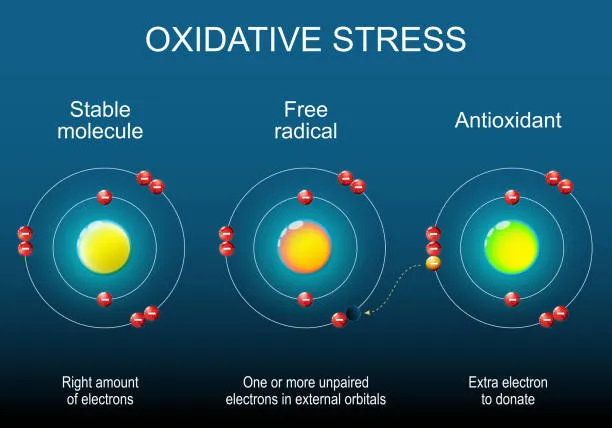
A free radical is any molecule with an unpaired electron in its outer shell, a chemically unstable configuration. According to a peer-reviewed review, free radicals are highly reactive because that unpaired electron seeks to pair itself by stealing an electron from a neighboring molecule, triggering a chain reaction of further oxidation; that review is available on PubMed Central. Reactive oxygen species (ROS), the most common category of free radical in the body, are produced continuously as a normal byproduct of mitochondrial energy production, immune cell activity, and exposure to pollution, radiation, and certain chemicals. In small, controlled amounts, ROS actually serve useful signaling functions. Oxidative stress specifically refers to what happens when ROS production outpaces the cell’s antioxidant capacity to neutralize them.
Not All Free Radicals Are the Same: Key Types of ROS
“Reactive oxygen species” is an umbrella term covering several distinct molecules, each with different reactivity and different cellular targets. The superoxide radical (O2•−) is typically the first ROS generated during mitochondrial energy production, and is itself converted by superoxide dismutase into hydrogen peroxide (H2O2), a less reactive but longer-lived molecule capable of diffusing across cell membranes. Hydrogen peroxide can then react with metal ions in a process called the Fenton reaction to generate the hydroxyl radical (•OH), widely considered the most reactive and damaging ROS, capable of attacking DNA, proteins, and lipids almost indiscriminately on contact. Understanding this sequence matters because it explains why the enzymatic defense system described later in this article targets multiple points along this chain, rather than relying on a single antioxidant to catch everything at the end.
Oxidative Stress Explained at the Molecular Level: Three Specific Targets

Free radical damage is not random, it consistently attacks three specific classes of molecules inside the cell, and each has its own well-documented mechanism.
1. Lipid Peroxidation: Damage to Cell Membranes
Cell membranes are built largely from polyunsaturated fatty acids, which are especially vulnerable to free radical attack. A peer-reviewed review describes lipid peroxidation as a chain reaction in which a free radical extracts a hydrogen atom from a fatty acid, generating a new radical that propagates the damage to neighboring lipid molecules, ultimately compromising the membrane’s structural integrity; that review is available on PubMed Central. A key byproduct of this process, malondialdehyde (MDA), is one of the most widely used laboratory biomarkers for measuring oxidative stress in research studies.
2. Protein Oxidation: Loss of Function
Proteins carry out nearly every function inside a cell, from enzyme reactions to structural support, and oxidative damage can directly impair that function. According to a peer-reviewed review, oxidative modification of amino acid side chains can cause proteins to misfold, aggregate, or lose their catalytic activity entirely, and oxidized proteins are typically tagged for degradation by the cell’s disposal systems; that review is on PubMed Central. When oxidative stress overwhelms the cell’s capacity to clear these damaged proteins, they can accumulate, which research links to several age-related conditions.
3. DNA Damage: The 8-OHdG Marker
DNA itself is a direct target. A peer-reviewed review describes how hydroxyl radicals attack the guanine base in DNA, producing a specific, measurable compound called 8-hydroxy-2′-deoxyguanosine (8-OHdG), now one of the most widely used biomarkers for oxidative DNA damage in both research and clinical studies; that review is available on PubMed Central. Left unrepaired, this kind of damage can lead to mutations during cell division, part of why oxidative DNA damage is studied extensively in aging and disease research.
Oxidative Stress: From Cause to Cellular Damage
Where Does the ROS Actually Come From?
Not all reactive oxygen species come from outside the body. According to a peer-reviewed review, mitochondria are the largest internal source, generating ROS as a natural byproduct of ATP production during oxidative phosphorylation; that review is on PubMed Central. See our full energy metabolism at the cellular level guide for that mechanism in detail. External contributors add to this internal load: UV radiation, cigarette smoke, air pollution, certain medications, and chronic psychological stress, discussed in our stress and antioxidants guide, all measurably increase ROS generation on top of the baseline your mitochondria already produce.
How Cells Defend Against Oxidative Stress
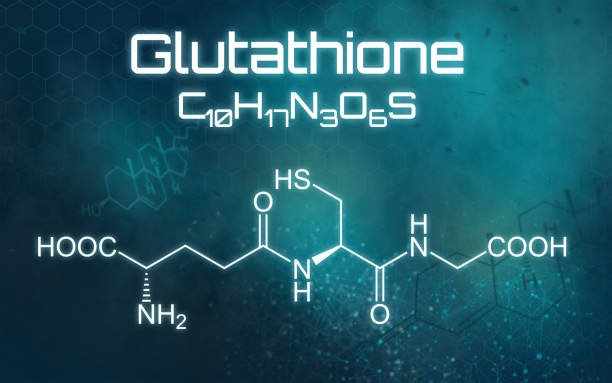
Cells are not defenseless against this. A layered enzymatic system exists specifically to neutralize ROS before they cause the damage described above: superoxide dismutase (SOD) converts the superoxide radical into hydrogen peroxide, catalase and glutathione peroxidase (GPx) then break that hydrogen peroxide down into water. Glutathione sits at the center of this system: according to a peer-reviewed review, it is often called the body’s “master antioxidant” because it directly neutralizes free radicals and also regenerates other antioxidants, including vitamins C and E, after they have been used up; that review is on PubMed Central. For the full chemistry of how glutathione works, see our complete explainer on what glutathione is.
The Free Radical Theory of Aging
The connection between oxidative stress and aging is one of the most extensively studied theories in biogerontology. The core idea, first proposed decades ago and refined since, holds that the cumulative accumulation of oxidative damage to lipids, proteins, and DNA over a lifetime contributes directly to the functional decline associated with aging. This does not mean oxidative stress is the sole cause of aging, current research treats it as one of several interacting mechanisms, but it is part of why the lipid peroxidation, protein oxidation, and DNA damage markers explained earlier in this article are studied so heavily in aging research specifically, not just in acute illness. It also explains why antioxidant status is discussed across such different topics, joints, hormones, immunity, energy, on this site: they are different tissues experiencing the same underlying free radical chemistry described in this article. See our broader guide on aging well for how this connects to practical, everyday health.
What Oxidative Stress Is Linked to in Research
Oxidative stress is not just a theoretical concept, it shows up as a measurable factor across a wide range of conditions discussed elsewhere on this site: reduced glutathione and elevated oxidative markers have been documented in PCOS and menopause, in sickle cell disease, in osteoarthritis and cartilage breakdown, and in chronic psychological stress. This is not a coincidence, it reflects the same underlying free radical chemistry explained in this article showing up in different tissues and conditions.
Signs Your Body May Be Under Oxidative Stress
- Persistent fatigue not explained by sleep or workload
- Frequent illness or slow recovery from infections
- Brain fog or difficulty concentrating
- Dull skin, premature wrinkles, or slow wound healing
- Muscle or joint discomfort that lingers after activity
These are general wellness signals, not a diagnostic test. Oxidative stress markers like MDA and 8-OHdG, discussed earlier, are measured through laboratory blood tests, not symptoms alone. Persistent or severe symptoms should be evaluated by a doctor. None of these signs point to a specific cause on their own, they are common to many conditions unrelated to free radical chemistry as well, which is exactly why laboratory biomarkers, not symptom checklists, are the standard used in actual research.
Common Myths About Oxidative Stress
- “All free radicals are bad.” As covered above, ROS at controlled levels serve normal signaling functions; the problem is specifically an imbalance, not their mere existence.
- “You can feel oxidative stress directly.” Oxidative damage is measured through specific biomarkers like MDA and 8-OHdG in laboratory testing, not through subjective symptoms alone.
- “Taking megadoses of one antioxidant vitamin solves oxidative stress.” The defense system described in this article is a coordinated network of enzymes and antioxidants working together; isolated megadosing does not replicate that coordination.
- “Oxidative stress only matters for older people.” ROS production and the need to manage it are active from a young age; the mechanisms described in this article are relevant across the lifespan.
Where Cellgevity Fits Into Oxidative Stress Defense

Cellgevity is built around RiboCeine™, a patented (US Patent #8,501,700) compound that delivers cysteine, the rate-limiting building block for glutathione synthesis, in a protected form. Liver-cell research has shown RiboCeine raising glutathione levels considerably more than NAC at a lower concentration; see our full Cellgevity vs NAC comparison for that data. A peer-reviewed study in Atherosclerosis found ribose-cysteine supplementation significantly raised glutathione-based antioxidant status and reduced oxidized lipid markers in a controlled human trial, viewable on PubMed (Kader et al., 2014), directly relevant to the lipid peroxidation mechanism explained earlier in this article. Cellgevity also includes Alpha Lipoic Acid, Selenium (a cofactor for glutathione peroxidase), and Turmeric Root Extract, alongside 10 other supporting nutrients.
To be clear about scope: this article explains the general biochemistry of oxidative stress and where glutathione fits into defending against it. It does not claim Cellgevity has been clinically trialed against oxidative stress biomarkers like MDA or 8-OHdG specifically; the Kader et al. trial cited above measured broader glutathione and lipid markers, not these exact biomarkers. That distinction matters because it is easy for a supplement page to blur “raises glutathione” and “reduces this specific biomarker” together as if they were the same claim; this article keeps them separate on purpose.
Practical Ways to Reduce Oxidative Stress
- Eat sulfur-rich foods – garlic, onions, and cruciferous vegetables (broccoli, cabbage, cauliflower) supply the raw materials for glutathione synthesis.
- Prioritize sleep – cellular repair and antioxidant regeneration happen largely during sleep.
- Exercise regularly – supports mitochondrial efficiency and antioxidant enzyme activity over time.
- Manage chronic stress – elevated cortisol is directly linked to increased ROS production; see our guide on managing stress naturally.
- Reduce toxin exposure – tobacco, excess alcohol, and unnecessary environmental pollutants add directly to ROS load.
- Limit excessive sun exposure – UV radiation is a well-documented external source of free radical generation in skin cells.
- Stay hydrated – adequate hydration supports the kidneys and liver in clearing oxidized byproducts, part of the body’s broader detoxification and antioxidant recycling process.
Frequently Asked Questions
What is the simplest way oxidative stress can be explained?
It is an imbalance between free radicals, unstable molecules that damage cells, and the antioxidants that neutralize them. When free radicals outnumber available antioxidants, the excess damages fats, proteins, and DNA inside cells.
How do doctors actually measure oxidative stress?
Through specific laboratory biomarkers, including malondialdehyde (MDA) for lipid damage and 8-OHdG for DNA damage, along with measuring levels of antioxidant enzymes like SOD, catalase, and glutathione peroxidase.
Are free radicals always harmful?
No. At normal, controlled levels, reactive oxygen species serve useful cell signaling functions. Oxidative stress specifically refers to the harmful state that occurs when free radical production exceeds the cell’s capacity to manage them.
Can Cellgevity reverse existing oxidative damage?
There is no clinical evidence that Cellgevity reverses existing damage to lipids, proteins, or DNA. Its role, as explained in this article, is supporting the body’s own glutathione-based defense system going forward, not repairing past damage.
Support Your Body’s Antioxidant Defenses
Explore Cellgevity, built on research-backed RiboCeine™ technology.
Shop Cellgevity NowRelated Reading
- What Is Glutathione and Why Your Body Needs It
- What Is Glutathione and Why Is It Important for Cellular Health?
- How to Manage Stress Naturally with Antioxidants
- Cellgevity vs NAC: Which Raises Glutathione Better?
- 10 Proven Ways to Stay Energized During Long Workdays — Boost Focus Naturally
About Author
