
What Is Glutathione and Why Your Body Needs It
What is glutathione? A complete guide to the body's master antioxidant: the chemistry, its functions, what depletes it, and how to raise it naturally.

What is glutathione? It is arguably the most important molecule in your body that you have never heard of. Produced inside nearly every cell, it protects against damage, helps process toxins, supports your immune system, and even plays a role in energy production. This guide answers what is glutathione from the ground up: the actual chemistry, what it does, what depletes it, and how to support it, including the real science behind Cellgevity’s approach. If you have ever wondered what is glutathione beyond a skincare marketing term, or why it keeps coming up across immune, energy, and hormonal health research, this article ties those threads together in one place.
What Is Glutathione, Chemically?
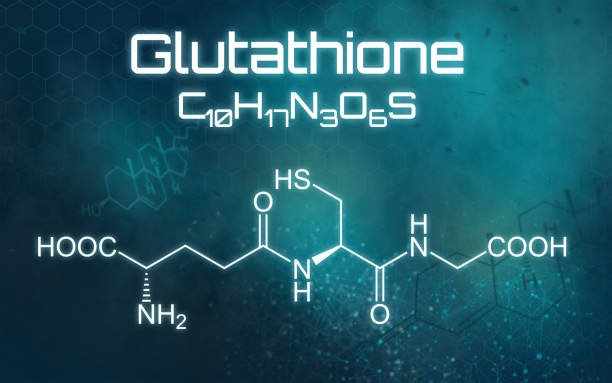
Glutathione (chemical shorthand: GSH) is a tripeptide, a small chain of three amino acids: glutamate, cysteine, and glycine. According to a peer-reviewed review published on PubMed Central, it is synthesized in a two-step, ATP-dependent process: the enzyme glutamate cysteine ligase (GCL) first joins glutamate and cysteine to form gamma-glutamylcysteine, the rate-limiting step, and then glutathione synthetase (GS) adds glycine to complete the tripeptide; you can read that review on PubMed Central. Cysteine is consistently identified as the limiting ingredient in this process, there is usually enough glutamate and glycine available, but cysteine availability is what determines how much glutathione your cells can actually produce. This single fact is the foundation for why cysteine-delivery supplements, including RiboCeine™, exist in the first place.
Where Glutathione Is Made and Stored in the Body
Glutathione is produced inside virtually every cell in the body, but concentrations vary significantly by tissue. According to a scientific reference chapter, the liver holds especially high concentrations, around 5 to 10 millimolar, since it is the body’s primary detoxification organ; roughly 85 to 90% of a cell’s glutathione sits in the cytosol, with the remaining 10 to 15% compartmentalized inside mitochondria, and liver glutathione turns over rapidly, with a half-life of just 2 to 3 hours; that reference is available via ScienceDirect. That rapid turnover is worth pausing on: your body is not storing a fixed reserve of glutathione, it is continuously manufacturing and using it, which is exactly why ongoing supply of cysteine matters more than a one-time boost.
What Is Glutathione’s Job in the Body? Four Core Functions
A peer-reviewed review on inborn glutathione metabolism disorders summarizes glutathione’s roles clearly: free radical scavenging, detoxification of xenobiotics (foreign chemicals) and carcinogens, redox reactions, biosynthesis of DNA, proteins, and leukotrienes, and neurotransmission and neuromodulation; you can read that review on PubMed Central. That is a long list for one small molecule. The four functions below are the ones most relevant to everyday health.
Glutathione’s Four Core Functions
The Antioxidant Role
Free radicals are generated constantly through normal metabolism, and in higher amounts through pollution, UV exposure, and stress. According to a peer-reviewed review, glutathione is often called the body’s “master antioxidant” because it directly neutralizes free radicals and also regenerates other antioxidants, including vitamins C and E, after they have been used up; that review is available on PubMed Central.
The Detoxification Role
In the liver, glutathione binds to toxins, certain drug metabolites, and heavy metals through a process called glutathione conjugation, making them water-soluble enough for the body to excrete. This is one of the liver’s primary detox mechanisms, and it is part of why liver glutathione concentration and turnover are so high compared to other tissues.
The Immune Function Role
A peer-reviewed review found that glutathione modulates the activation, metabolism, and cytokine release of macrophages, natural killer cells, and T and B lymphocytes, and that adequate intracellular glutathione is required for proper immune cell differentiation; that review is on PubMed Central. See our full breakdown in Strengthen Your Immunity.
The Cellular Energy Role
Mitochondria generate ATP through a process that also produces reactive oxygen species as a byproduct. A peer-reviewed review found glutathione is the key antioxidant responsible for neutralizing that byproduct before it damages mitochondrial membranes and proteins; that review is on PubMed Central. See our full guide on energy metabolism at the cellular level for more.
Reduced vs. Oxidized Glutathione: Why the Ratio Matters
Glutathione exists in two forms: reduced (GSH), the active form capable of neutralizing free radicals, and oxidized (GSSG), the “spent” form left behind after that reaction happens. According to the ScienceDirect reference cited earlier in this article, GSSG normally makes up less than 1% of total cellular glutathione, with the reduced form dominating. The ratio between the two, not just the total amount, is a meaningful marker researchers use: a shift toward more GSSG relative to GSH signals the antioxidant system is under strain and struggling to keep up with free radical production. Several of the conditions discussed throughout this article, chronic stress, menopause, and certain infections, have specifically been linked in research to an increased GSSG-to-GSH ratio, not just lower total glutathione.
The body has a dedicated enzyme, glutathione reductase, whose job is to convert GSSG back into active GSH, recycling it rather than requiring fresh synthesis each time. This recycling system is efficient under normal conditions but can become overwhelmed during periods of high oxidative demand, which is part of why chronic, ongoing stressors have a larger cumulative effect than a single acute one.
What Depletes Glutathione?
Glutathione levels are not static. Research discussed throughout this site links several factors to measurably lower glutathione: aging, chronic stress and elevated cortisol (see our stress and antioxidants guide), poor diet lacking sulfur-containing amino acids, smoking and excess alcohol, environmental toxin and heavy metal exposure, and certain health conditions. Women with PCOS and women going through menopause have both been found to have measurably lower glutathione in peer-reviewed studies; see our hormonal balance guide for that research. Sickle cell disease is another condition consistently associated with depleted glutathione and elevated oxidative stress; see our sickle cell and glutathione guide for the details.
Signs Your Glutathione Levels May Be Low
- Persistent fatigue not explained by sleep or workload
- Frequent illness or slow recovery from infections
- Brain fog or difficulty concentrating
- Dull skin or slow wound healing
- Increased sensitivity to everyday stressors
These are general wellness signals, not a diagnosis, and overlap with many other causes. Persistent or severe symptoms should be evaluated by a doctor rather than self-diagnosed as a glutathione problem.
How to Raise Glutathione Naturally
- Eat sulfur-rich foods – garlic, onions, and cruciferous vegetables (broccoli, cabbage, cauliflower) supply the raw materials for cysteine and glutathione synthesis.
- Prioritize sleep – cellular repair processes, including antioxidant regeneration, happen largely during sleep.
- Exercise regularly – supports mitochondrial density and overall antioxidant capacity over time.
- Manage stress – chronic cortisol elevation is directly linked to increased oxidative damage.
- Reduce toxin exposure – tobacco, excess alcohol, and unnecessary environmental toxins all add to the free radical load glutathione has to manage.
A Brief History of Glutathione Research
Glutathione has been studied for well over a century, but the modern understanding of how to effectively raise it is much more recent. N-acetylcysteine (NAC) was developed in the 1960s and became the standard cysteine-delivery option for decades, used clinically as an acetaminophen overdose antidote long before it became a wellness supplement. Dr. Herbert T. Nagasawa, a medicinal chemist at the University of Minnesota, spent much of his career studying how to better protect cysteine from breaking down before it reaches the liver and other tissues. His research group’s foundational 1987 paper in the Journal of Medicinal Chemistry tested ribose-cysteine prodrugs and found they offered meaningfully better protection against liver injury than earlier approaches; that paper is available through ACS Publications. That research eventually led to RiboCeine being licensed to Max International and formulated into Cellgevity.
Glutathione, Skin, and the Aging Process
Skin cells are directly and constantly exposed to UV radiation and environmental pollutants, both major sources of free radical load, and skin turns over rapidly compared to many other tissues. Because glutathione supports DNA and protein repair processes at the cellular level, it plays a role in how skin cells recover from that daily exposure. This is a separate mechanism from glutathione’s popular marketed use for skin lightening, which relies on a different pathway (inhibiting melanin production) and is not the focus of this article. Glutathione levels and mitochondrial efficiency also naturally decline with age, part of why cellular antioxidant status is discussed as one piece of healthy aging; see our full guide on aging well for that broader picture.
Why Cysteine Is the Bottleneck, and Where RiboCeine Fits In

Since cysteine is the rate-limiting ingredient in glutathione synthesis, as established in the biochemistry section above, most glutathione-support strategies focus on delivering more usable cysteine to cells, rather than trying to supplement glutathione itself (which is a larger molecule that does not survive digestion intact very well). Cellgevity is built around RiboCeine™, a patented (US Patent #8,501,700) compound that pairs cysteine with a D-ribose molecule to protect it through digestion. Liver-cell research has shown RiboCeine raising glutathione levels considerably more than NAC, an older cysteine-delivery compound, at a lower concentration; see our full Cellgevity vs NAC comparison for that data. A peer-reviewed study in Atherosclerosis found ribose-cysteine supplementation significantly raised glutathione-based antioxidant status in a controlled human trial, viewable on PubMed (Kader et al., 2014). In 2024, PRUVN Research LLC also announced preliminary human clinical trial results on RiboCeine and serum glutathione levels; that announcement is on PR Newswire.
Cellgevity also combines RiboCeine with 12 additional nutrients, including Alpha Lipoic Acid (which independently raises ATP in cell studies), Turmeric Root Extract, Selenium, and Vitamin B6, both cofactors for the enzymes involved in glutathione synthesis and recycling. For a comparison against another delivery approach, see our liposomal glutathione vs RiboCeine breakdown.
Common Myths About What Glutathione Actually Does
- “Glutathione is only for skin lightening.” As covered above, glutathione’s marketed skin-lightening use is a separate, narrower application than its core biological roles in antioxidant defense, detoxification, and immune function.
- “You can just eat glutathione-rich foods and get the same effect as supplementation.” Dietary glutathione itself is largely broken down during digestion; foods matter more for supplying the amino acid building blocks, especially cysteine, than for delivering intact glutathione.
- “More glutathione is always better.” The body tightly regulates glutathione synthesis, and the research discussed throughout this article focuses on correcting depletion and supporting normal function, not maximizing levels beyond what the body naturally maintains.
- “Glutathione supplements work the same regardless of the delivery method.” As covered in the RiboCeine section above, how a cysteine-delivery compound survives digestion meaningfully affects how much reaches your cells.
Frequently Asked Questions
What is glutathione made of?
Glutathione is a tripeptide made of three amino acids: glutamate, cysteine, and glycine, joined together through a two-step, ATP-dependent enzymatic process.
Does the body produce glutathione naturally?
Yes. Glutathione is produced inside nearly every cell, with the liver holding especially high concentrations. It is not obtained primarily through diet the way vitamins are, though diet supplies the building blocks needed for the body to manufacture it.
Can you take glutathione as a pill and have it work directly?
Oral glutathione faces digestive breakdown challenges, which is why many approaches instead focus on delivering cysteine, the rate-limiting precursor, so the body can synthesize its own glutathione internally.
Is low glutathione dangerous?
Chronically low glutathione is associated with increased oxidative stress and has been linked in research to various health conditions, but glutathione levels alone are not a diagnosis. Persistent symptoms should be evaluated by a doctor.
Support Your Body’s Master Antioxidant
Explore Cellgevity, built on research-backed RiboCeine™ technology.
Shop Cellgevity NowRelated Reading
- Cellgevity vs NAC: Which Raises Glutathione Better?
- Cellgevity Side Effects: What to Actually Expect
- Support Your Energy Metabolism at the Cellular Level with Cellgevity
- Stronger Cells for Better Daily Wellness | Cellgevity
- Cellular Health: What Your Cells Need to Keep You Healthy and Energized
- What Is Glutathione and Why Is It Important for Cellular Health?
About Author
